
by Dr.Harald Wiesendanger– Klartext
What the mainstream media is hiding
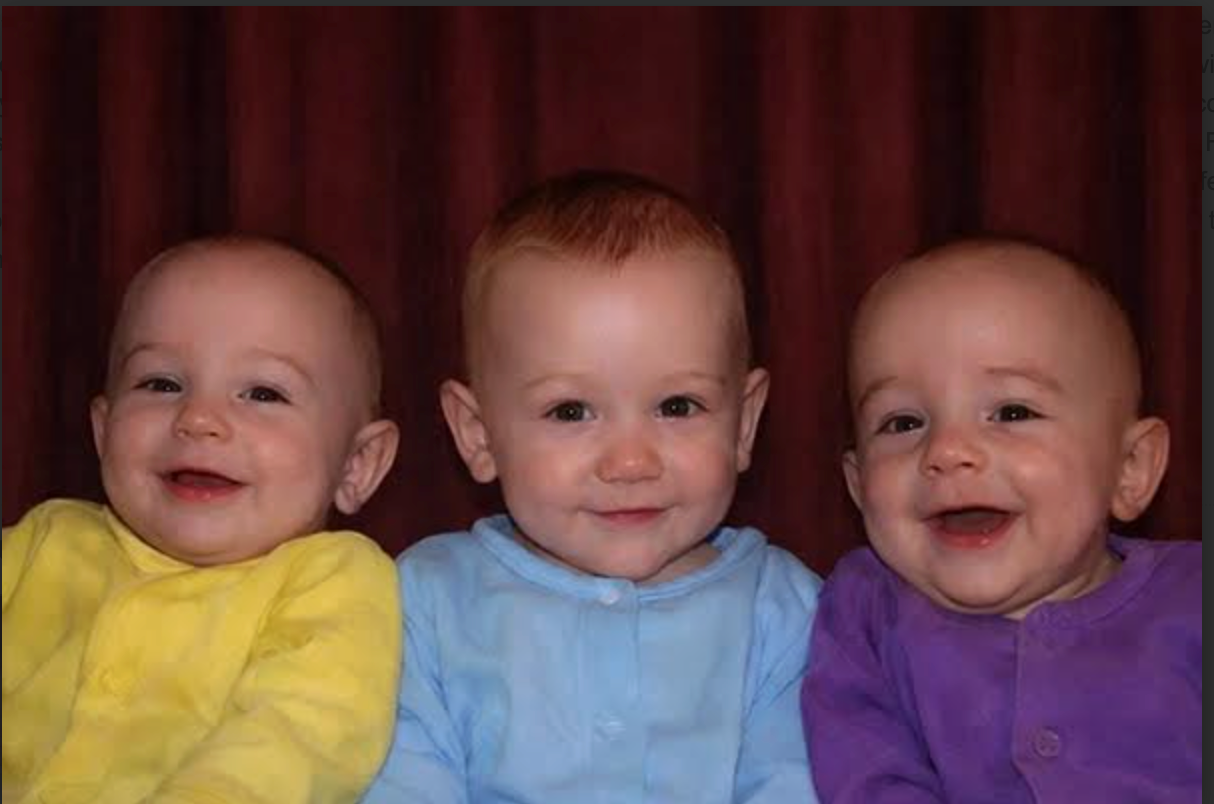
“World Autism Awareness Day” on April 2 provides an opportunity to recall the fate of the McDowell triplets:Attheageofninemonths, allthreesiblingssuddenlydevelopedsevereautismsymptomsonthesameday—justafewhoursafteravaccinationappointment. Manufacturers, experts, andmainstreammediaaremakingfoolsofthemselveswiththeireffortstodismissthisheartbreakingeventascoincidentalorgeneticallycaused.They are trying to divert attention from a hair-raising lesson for parents who do not want to relinquish their own responsibility at the doctor’s office door.
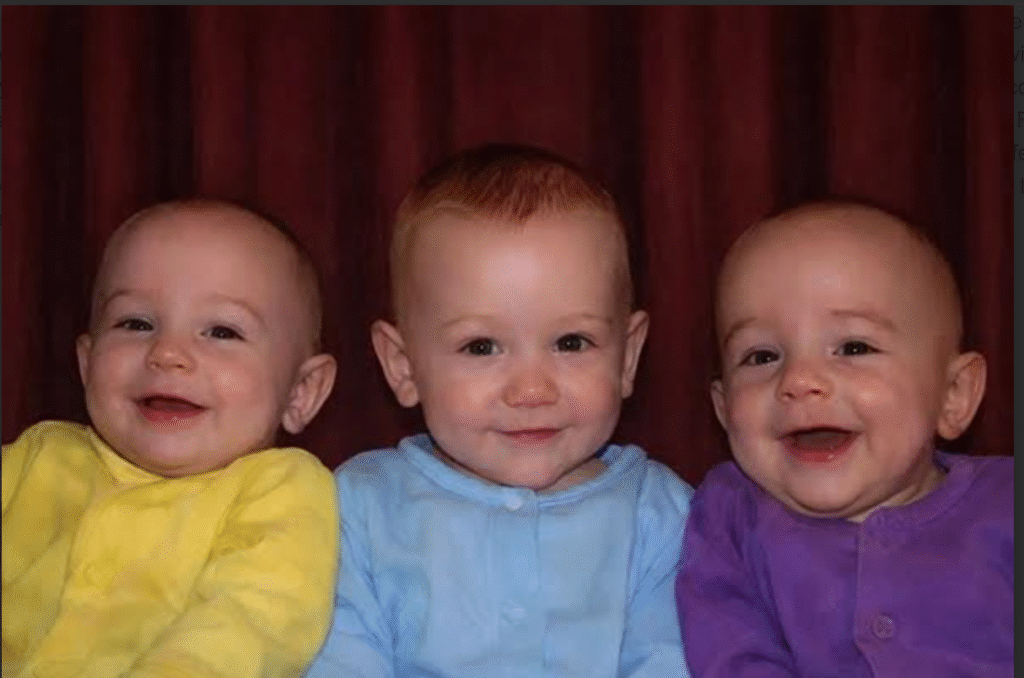
On June 25, 2007, Brenda McDowell takes her triplets, Richie, Robbie, and Claire, accompanied by their nanny, to a pediatrician’s office in Detroit. The siblings, nine months and four days old, have a routine checkup scheduled for 10 a.m. The mother assumes that nothing alarming will come to light. Born on September 26, 2006, in the 36th week of pregnancy with a birth weight of 2.3 kilograms each, her little ones are thriving. They are in perfect health, more than age-appropriate in their development, happy, and bright. “Every single day with them was a celebration,” Brenda gushes. (1)
All three babies receive a single vaccination: “Prevenar 7” against pneumococci. (2)
Immediately after the supposedly harmless “prick,” Claire begins to scream piercingly—and continues to scream nonstop. Two hours later, around noon, the girl stops responding. “As if she were blind and deaf and completely developmentally impaired,” Brenda and the father, David, recall in a joint TV interview. “She just stared at the ceiling fan.”
At 2 p.m., “Richie also completely shut down internally.” No more “Mama-Papa.” No more Cruising, no more “furniture walking”: a crucial motor milestone in a baby’s development, just before taking their first completely independent steps—so to speak, “mountain climbing for beginners” in the living room. After they can already pull themselves up on objects, during “cruising” they hold onto a sturdy piece of furniture with both hands, such as the sofa or the coffee table. They shift their weight from one leg to the other, taking side steps along the furniture while “securing” themselves with their hands. Richie suddenly stopped doing this.
And the so-called “blowing raspberries” also came to an abrupt end. This doesn’t refer to any special way of handling fruit. Rather, it’s an affectionate term for a very typical baby behavior in which little ones press their lips together and blow air through them, creating a vibrating, snorting sound—almost like a
“fart.” This, too, is considered an important developmental milestone in pediatrics, usually occurring between the 4th and 7th month. It shows that the child can control their lips and breathing and enjoys social interaction. No sooner had he been vaccinated than Richie had forgotten how to do it.
And Robbie? “By the end of the day, he looked like he’d been hit by a bus. He had a dazed expression on his face. If you asked him a question or said his name, he acted as if he were deaf.”
From that day on, the triplets were like different children. What had made up their little personalities was gone. “The giggling and laughing, the babbling and chattering stopped. The running around stopped. All reflexes vanished. They stopped blinking, yawning, coughing, sneezing. They didn’t even react anymore when something approached their eyes. Nothing could rattle them anymore—even their startle reflex was gone. If a cell phone or a book fell to the floor behind them, they didn’t react. They never interacted with each other again. They never held hands again. They no longer made eye contact. They never looked at each other again. They were no longer interested in anything or anyone. From then on, each of our children lived in their own little, isolated world.”
Nearly five years later, the parents learned about the National Vaccine Injury Compensation Program (VICP)—a government agency established in the 1980s where vaccine victims can file a claim for compensation instead of having to pursue a standard civil lawsuit. However, the three-year filing deadline had already passed. “We were also told that we couldn’t sue anyone—no doctors, no vaccine manufacturers. After all, we had consented to the vaccination.”
“We are living proof that they’re all lying”
What on earth had happened to the triplets? From the very beginning, conventional doctors denied any causal link to the vaccination.
Instead, the parents were told to accept “genetic factors”: With triplets, the probability is extremely high that all three share certain neurological predispositions. As studies allegedly show, structural changes in the brain associated with autism often begin even before birth. Seriously? A geneticist consulted by the parents made it clear that it certainly couldn’t be due to genetics: It was simply impossible for three siblings to suddenly develop autism on the same day due to genetic factors and lose all their abilities. “That’s not how genetics works.”
Other conventional doctors dismissed the catastrophe as an unfortunate “coincidence.” Autism symptoms, they explained, often appear by the age of 24 months—precisely the period when many routine vaccinations take place. But temporal proximity alone does not prove causality.
To the McDowells, this explanation also sounds like a ridiculous excuse. If pure coincidence were at play, autism symptoms would have to appear in just as many children in the month before vaccination appointments as in the first month after.
Whether this is the case could easily be determined using medical records and parent surveys; yet not a single study has addressed this to date. I wonder why? Any scientist who dares to tackle this hot potato would have to worry about their future career. The internet is teeming with reports of children who suddenly developed autistic behaviors immediately after vaccination appointments; by contrast, one searches in vain for cases in which such massive changes began shortly beforehand. (Put this to the test by having an AI like ChatGPT, Gemini, or Claude search for them.)
Vaccine advocates dismiss cases like the McDowell triplets as inferior, merely “anecdotal” evidence. In contrast, the medical community has long held a consensus—based on high-quality controlled studies—that there is no causal link between vaccinations and autism. Upon closer inspection, however, it becomes clear: The studies in question are consistently of poor quality, and the alleged “consensus” is a debunked rumor with no scientific basis; 18 strong arguments actually point to the feared causal link. Six recent, extensive, non-industry-funded studies, published between 2017 and 2022, independently reach the same conclusion: so-called “vaccinations” do not protect children’s health at all.
Brenda and David McDowell, in any case, are no longer swayed: “We are living proof that they are all lying!” To warn other parents about the monstrous risks that vaccinating pediatricians are keeping from them, they share their family’s story publicly at every opportunity—including in the harrowing documentary Vaxxed II: The People’s Truth (2019) (3), a 15-minute interview with the VaxXed Stories Channel (2016), and on the TV channel of the health advocacy organization Children’s Health Defense (2023), founded by Robert F. Kennedy Jr.
In the meantime, the parents have spent hundreds of thousands of dollars trying to restore their children’s health—to no avail. Therapeutic successes have been limited. “The only person we’ve gotten back is Robbie”: At least this child is no longer incontinent and has made enough progress to be integrated into a school class. However, he suffers from severe obsessive-compulsive disorder.
Richie, on the other hand, is still not fully potty-trained, experiences severe pain, and constantly grinds his teeth. He can say at most two words.
And the girl? “Claire is still completely nonverbal.” She also has to wear diapers all the time.
A Ray of Hope: “Son-Rise”
Parents find the Son-Rise therapy particularly helpful. Affected parents, Barry and Samahria Kaufman, developed this program in the 1970s after their son Raun was diagnosed with severe autism. Instead of pushing the boy to adapt to reality, they decided to “immerse themselves in his world.” In contrast to conventional therapies such as Applied Behavior Analysis (ABA), the core philosophy of this approach is “Joining,” or participating. Stereotypical behaviors are by no means suppressed: If a child spends hours sorting stones, flapping their hands (stimming), or repeating sounds, they are not corrected. Instead, the therapists or parents join in.
The goal is to build a bridge to the child through this process. According to Son-Rise theory, the child feels safe and understood when their world is accepted, whereupon they voluntarily open up to the outside world. To minimize distractions, Son-Rise therapy often takes place in a low-stimulation room (“playroom”).
The Kaufmans claim that their son was completely “cured” of autism through the method. The McDowells, however, have not come anywhere near achieving that much so far.
Brenda and David McDowell have very little use for the woke trend of no longer viewing autism as a disease, but instead downplaying it as a socioculturally enriching contribution to “neurodiversity.” Just how “enriched” must one feel day after day with children who are now 20 years old and still not potty-trained? “At two, three, or four in the morning, Claire wets her diaper. Well, you can imagine how unpleasant that is, so we take it off pretty quickly, and suddenly everything is soaked—it’s all over the bed, it’s all over me, it’s all over her. Exasperated, we both scold the child—even though she’s the only innocent one in this situation.”
Enormous benefits with negligible risk?
Even a visit to the dentist can be fatal: due to complications from anesthesia; due to an allergic reaction to the anesthetic, to administered antibiotics, to the latex in the gloves; due to a stress-induced heart attack or stroke; due to endocarditis, an inflammation of the heart caused by bacteria entering the bloodstream from the mouth; or because the patient inhales a small instrument, a crown, or a piece of tooth, which blocks the airways. But would we therefore refrain from going to the dentist? We do it anyway because the risk of tragic incidents is extremely low. For healthy patients, it is 1 in 1,000,000, making it about as likely to occur as being struck by lightning over the course of a year.
Isn’t what happened to the McDowell triplets just as unlikely? Serious side effects following pneumococcal vaccinations are very rare; for Prevenar vaccines, the rates of serious events are reportedly in the range of a few cases per 1,000,000 doses. Specifically for “Prevenar 7,” which was administered to the triplets, the U.S. Vaccine Adverse Event Reporting System (VAERS), established in 1990 to monitor vaccine safety, (Vaccine Adverse Event Reporting System), established in 1990, reports a rate of 13.2 reports per 100,000 doses; the proportion of “serious” side effects was less than 15%, including 117 deaths over the course of two years. It should be noted that VAERS collects reported suspected cases, not those that have already been reviewed and confirmed.
Accordingly, the risk that a child will suffer the same fate as Claire, Richie, and Robbie is extremely low.
Is it small enough to expose your own baby to it with a clear conscience?
“Of course!” is what parents hear from nearly every pediatrician. After all, pneumococci are capable of causing inflammation of the middle ear, the conjunctiva, and the sinuses. But an infection can have even worse consequences: namely when the bacteria become “invasive,” leaving their natural habitat—the mucous membranes of the nasopharynx—and penetrating areas of the body that are normally sterile and germ-free: the lymphatic system and the bloodstream, through which they can reach every organ. In the worst case, they lead to severe pneumonia, cause meningitis (inflammation of the meninges), with permanent neurological damage, or even potentially fatal sepsis (blood poisoning). Compounded by AIDS, malnutrition, poor hygiene, and medical errors, three million children worldwide die each year from “invasive” pneumococcal infections. The resulting meningitis is the second most common form of bacterial meningitis.
How common? Since 2023, between 110 and 170 such cases have been recorded annually in Germany. (During the COVID years from 2020 to 2022, these numbers temporarily dropped to around 40 to 90 due to contact restrictions.) Since the turn of the millennium, there have been an estimated 3,500 to 4,500 cases of pneumococcal meningitis among those under 16 in this country. 5 to 10% die from it—250 to 400 children since the year 2000—and 15 to 20% of survivors suffer from severe long-term consequences such as hearing loss, delayed mental development, motor disorders, and epilepsy. (4)
What doctors tend to keep quiet: Severe cases consistently affect immunocompromised children, never healthy ones, and, incidentally, even vaccinated ones—just as with measles.
So frightened—and intimidated by medical authority—most parents unfortunately no longer dare to ask further questions and refrain from doing their own research. The doctor must know best. And so they miss out on information that they should absolutely take into account when making a vaccination decision.
A healthy immune system provides better protection
The principle of informed consent is considered a cornerstone of modern medical ethics. According to this principle, any medical intervention—from a simple blood draw to surgery or vaccination—constitutes unlawful bodily injury unless the patient—or, in the case of a minor, their legal guardian—has given valid consent. This consent must be based on comprehensive information. What this entails is regulated by § 630e of the German Civil Code (BGB): The treating physician is obligated to explain to the patient all circumstances essential for consent. This includes the nature, scope, procedure, expected consequences, and risks of the intervention, as well as explanations regarding whether it is necessary, urgent, and without alternative.
What, therefore, must a doctor inform parents of in advance before vaccinating their child against pneumococci?
There are around 100 different types of the pneumococcal bacterium, Streptococcus pneumoniae, which differ from one another based on specific characteristics of their capsules, which consist of polysaccharides (complex sugars). Virtually all of them are a harmless component of the human microbiome; they can colonize the upper respiratory tract and the nasopharynx without causing any symptoms. 60% of all children and 5 to 10% of adults carry at least one type in their nose without becoming ill. The presence of these microorganisms brings many benefits. The microbiome functions like a densely populated lawn: Where a peaceful resident is already present, weeds cannot take hold. When harmless strains of pneumococci colonize the nasopharynx, they compete with other bacteria for space and nutrients. This often prevents far more aggressive pathogens—such as certain strains of Staphylococcus aureus—from multiplying in large numbers. In addition, pneumococci produce biochemical precision weapons known as bacteriocins: small protein molecules that inhibit the growth of other bacterial strains or kill them directly. Furthermore, pneumococci secrete hydrogen peroxide (H2O2), which is toxic to many other bacterial species; thus keeping troublesome competitors at bay, stabilizing their own niche—and in this way also helping to maintain the balance of the trillions of “subtenants” living on and inside our bodies. Their constant presence on the mucous membranes also “trains” the immune system.
A Finnish study that examined 450 unvaccinated children from birth to age 13 provides insights into how effortlessly the immune system usually learns to cope with these bacteria as it “matures.” How does it recognize them, and how does it fight them if necessary?
Newborns still enjoy “nest protection” thanks to their mother’s antibodies. The major immune training takes place between the ages of three and six: As the little ones constantly come into contact with other children in daycare centers and kindergartens, their antibody levels rise dramatically. Every time a child has one of these bacteria in their nose—even without getting sick—their immune system takes a “photo” of the pathogen, so to speak, and builds up antibodies. By the age of 13, almost all children have developed high levels of antibodies against most bacterial variants. Their immune system has created a vast “library” of wanted posters. This allows it to defend itself immediately before a serious illness develops. A healthy, breastfed child has a robust innate immune system that generally handles pneumococci without difficulty. The risk of invasive disease is then virtually zero. While vaccination policies stoke fear with extremely rare complications such as meningitis, the vast majority of infections are harmless inflammations that would strengthen the immune system in the long term.
What’s unique: While conventional vaccines often target only the “sugar capsule”—the outer shell
of certain serotypes, the immune system learns to recognize the proteins inside the bacteria through the natural training process. Since these proteins are the same in almost all serotypes, the child develops protection over time that is much more comprehensive and robust than what a traditional vaccine alone could provide.
And what if this protection fails? Children under the age of three are most at risk, as long as their immune systems are still immature. However, if a pneumococcal infection does get out of hand, there is no reason to panic. This is because these bacteria are highly sensitive to penicillin and similar antibiotics – unless overprescribing doctors have previously caused resistance by prescribing antibiotics for harmless viral infections.
Do vaccinations provide reliable protection, and can they eliminate every risk? In the clinical trial for “Prevenar 7,” 37,868 infants from Northern California aged 2, 4, 6, 12, and 15 months received vaccinations—half received “Prevenar,” the other half a meningococcal vaccine for comparison. In the control group, 49 children developed an invasive pneumococcal infection, whereas in the “Prevenar” group, only 3 did—a relative decrease of 93.9%. That makes an impression, as long as you don’t consider by how much the absolute risk of disease actually decreased: by a mere 0.24%. In the control group, the incidence was approximately 0.002584 or 0.26% (49/18,962), while in the “Prevenar” group it was about 0.000158 (3/18,906). That is not exactly an impressive gain in safety. And even this minuscule benefit shrank to near-submicroscopic levels in follow-up studies on “Prevenar”: in Canadian babies as well as in Australian ones.
Incidentally, vaccines target only a small portion of the enormous diversity of pneumococci, which is considered particularly dangerous. As the name suggests, “Prevenar 7,” which was administered to the McDowell triplets, is “7-valent,” meaning it covers 7 types, while competing products cover up to 23. But they do not even reliably immunize against this small subset of the entire pneumococcal spectrum. Five doctors from the pediatric intensive care unit at the University Hospital of Lausanne report (5): “Recently, we have been confronted with extremely severe invasive pneumococcal diseases.” This includes the case of a two-year-old girl who barely survived pneumonia complicated by sepsis. A 7-month-old baby developed meningitis and treatment-resistant seizures—he was left permanently paralyzed.
A 9-month-old infant with meningitis and septic shock suffered multi-organ failure, requiring surgery on three limbs. “These three children,” the Swiss doctors emphasize, “were all vaccinated and had received at least two doses of Prevenar (13).” Before their crisis, each of the three children was completely healthy, with no immune deficiency. Two had contracted pneumococcal types not included in the vaccine. In the third child, serotype 3 had struck—precisely the one the vaccination was supposed to protect against.
But even if a pneumococcal vaccine succeeded in at least completely eliminate the specific bacterial types it targets, other, potentially more aggressive types immediately colonize the vacant space in the nasopharynx—most notably type 3, which frequently causes severe pneumonia, and type 19A, which tends to exhibit particularly pronounced antibiotic resistance. (6) Skeptics ask: What good is preventing type X if the child instead contracts type Y, which is not included in the vaccine? A Spanish study involving approximately 120,000 children under the age of five found: Over the course of 13 years, invasive pneumococcal disease decreased by 76% among vaccinated children and by as much as 78% among unvaccinated children. Among vaccinated children who still contracted the disease despite the “shot,” pneumococcal types not included in the vaccine occurred three times more frequently.
Parents should also consider another enormous risk: Pneumococcal vaccines may cause their child’s immune system to preemptively attack all strains contained in the vaccine—at a time when these strains are not yet causing any harm but are peacefully residing in the normal bacterial flora. Interfering with the microbiome in this way can lead to side effects that hardly any vaccinating pediatrician considers or addresses. Could the body’s own defenses, “primed” in this way, switch to autoimmune reactions? As pediatricians have observed in isolated cases, pneumococcal vaccinations triggered such reactions in infants and toddlers. For example, a 14-month-old girl developed Kawasaki disease within a day, a condition in which blood vessels throughout the body become inflamed, carrying the risk of an aneurysm forming in the coronary arteries, which can lead to a heart attack. (However, the girl was vaccinated against MR and varicella at the same time.) In the first two years following the approval of “Prevenar 7” for children, 14 cases of immune thrombocytopenia were reported to VAERS; in this condition, the immune system mistakes the body’s own blood platelets for dangerous invaders.
Are there circumstances under which parents should still trust vaccines more than their child’s immune system?
Vaccine advocates explain: Infants and toddlers under 2 years of age are at the highest risk. Their “immature” immune system is not yet capable of effectively recognizing the specific sugar capsule of pneumococci.
Since the bacteria “hide” under this capsule, the body cannot mount a targeted defense before the pathogens spread through the bloodstream. This security gap must be closed through vaccination. Vaccine skeptics counter: An infant’s immune system is not “weak,” but programmed for tolerance. A massive “stimulation” of the immune system through vaccination during this sensitive phase can disrupt natural development. In the long term, it increases the risk of allergies or autoimmune diseases.
Minimal benefit with significant risks
Because the immune system of children under 2 years of age cannot recognize the bacterium’s sugar capsule on its own, vaccine manufacturers “get creative.” The sugars are linked to a protein and often mixed with aluminum salts as adjuvants. “Prevenar 7” was the first such conjugate vaccine. Skeptics express serious concerns about the long-term effects of aluminum in an infant’s body, particularly regarding neurological development. A standard dose of Prevenar 7 contained 0.5 milligrams of aluminum phosphate; this corresponds to 0.125 mg of pure aluminum per injection.
Pro-vaxxers point out that this is a negligible amount: after all, an infant ingests a total of about 7 mg of aluminum through breast milk in the first six months, 38 mg through cow’s milk-based infant formula, and as much as 117 mg through soy-based formula.
Parents should not let themselves be fooled by such number games. Aluminum is a highly toxic neurotoxin for which the European Food Safety Authority (EFSA) has set a tolerable weekly intake from food of 1 mg per kilogram of body weight. The body absorbs only 0.1 to 1% of the aluminum ingested through food (7), whereas it absorbs all of the aluminum injected via vaccines; it is not released slowly but enters the body immediately in large quantities, making it harder to metabolize and excrete. Accordingly, the limit for vaccinations should be 0.001 mg; the actual aluminum content in “Prevenar7” is many times higher. Added to this are all other vaccines: If a child completes the full vaccination schedule, they ingest 3.5 to 4.5 mg of aluminum in their first year of life alone. (8) It makes the blood-brain barrier more permeable, crosses it itself, and remains in the brain for years. Conventional medicine has now also had to acknowledge that it can trigger autoimmune diseases; since 2011, it has referred to this condition as ASIA (autoimmune/inflammatory syndrome induced by adjuvants). How much aluminum is sufficient to trigger it varies from person to person, depending on genetic susceptibility; in the worst case, a single vaccination is enough. (9)
The mere fact that such questionable additives are necessary at all should give parents pause. Without artificial “potency enhancers,” the injected material from the bacterial capsule would not be sufficient to prompt the child’s immune system to produce enough antibodies.
Doesn’t this speak more to the biological wisdom of our immune system than to its inadequacy? Apparently, it assesses the threat as too minor to sound the alarm.
Does the potential harm from questionable ingredients possibly outweigh the danger posed by the actual disease?
Added to this is another underestimated risk that may have been the deciding factor in the McDowell case: contamination. Seven years after the fatal “preventive” shots, a doctor who was a friend of the parents discovered that the vaccine batch in question was contaminated. “A few weeks later, the manufacturer recalled it due to sterilization issues,” Brenda and David report, “since it had already killed a two-year-old, but this was kept secret from the public.” (10)
How often does a pneumococcal vaccination cause adverse side effects, especially severe ones? Because parents usually have their child receive it at the same time as the 6-in-1 vaccine for convenience—even though they could insist on a single vaccination at a separate appointment—this is difficult to estimate. Between 2001 and 2014, the Paul Ehrlich Institute (PEI)—essentially Germany’s “TÜV” for vaccines and biomedical drugs—recorded a total of 351 deaths following vaccinations, 48 of which were attributed to Prevenar. That seems like a small number as long as unreported cases are not taken into account: According to several studies, the reporting rate for vaccine complications is between 1 and 10% of actual cases; some estimates put it as low as a few per thousand. This is because filling out the reporting forms is time-consuming and not compensated. Because doctors are drilled with the mantra during their studies and continuing education that vaccines are, of course, “effective and safe,” they tend to attribute adverse symptoms following the “shot” to coincidence rather than causality.
Children who are truly at risk from pneumococci are those whose bodies are already stressed or weakened by another underlying condition: due to a chronic underlying disease such as a congenital heart defect, severe asthma, or cystic fibrosis; in cases of metabolic disorders such as poorly controlled diabetes mellitus; in cases of kidney disease such as nephrotic syndrome; in cases of immunodeficiencies; in cases of anatomical abnormalities, such as asplenia, in which the spleen is absent: This organ is the most important “filtering station” for pneumococci in the blood. Children without a spleen or with sickle cell anemia—in which the spleen is often non-functional—are at significant risk.
That is why differentiation is necessary: Vaccinate only for at-risk groups, but not for obviously healthy children like Claire, Richie, and Robbie.
Their pediatrician continued to see things differently even after the fateful June 25, 2007: When the parents made it clear to him that they would forgo further vaccination appointments, they did not receive understanding, but rather the brusque statement: They should not show their faces at the practice again.
Unvaccinated children are generally healthier
The McDowell tragedy provides “anti-vaxxers” with welcome ammunition to fuel vaccine skepticism—too broadly.
After all, there are hundreds of vaccines on the market worldwide, with different mechanisms of action, compositions, side effect profiles, and trial periods. Anyone who wants to reasonably weigh the benefits against the risks, rather than hastily committing to a “pro” or “con,” must evaluate such aspects in a nuanced way and consider them in detail, as well as differences regarding the risk of infection, prevalence, and severity of the diseases vaccines are intended to protect against.
One thing, however, makes the current state of research—insofar as it does not consist solely of industry-funded commissioned studies—a well-founded generalization: unvaccinated children are generally healthier. (See KLARTEXT “Does Vaccination Make You Healthier?”.) With flimsy excuses, authorities have always refused to provide scientifically sound justification for their vaccination recommendations. Yet hundreds of studies now show: Vaccinated individuals face a far higher risk of various chronic diseases. This risk increases the more frequently and the earlier they are “poked.”
Parents should be aware of what they may be doing to their child if they ignore this fact. It wasn’t just the McDowell family that paid dearly for this oversight. Just like doctors who vaccinate without a second thought, they too clearly lacked respect for the highly complex, astonishingly effective self-healing processes that have been refined over millions of years of evolution. Any external intervention disrupts and endangers the delicate balance within this incredibly intricate system. No doctor who is knowledgeable about this will continue to uncritically follow official vaccination schedules—unless financial incentives mean more to them than the well-being of those seeking advice and help.
Notes
(1) Quoted from Vaxxed II: The People’s Truth (2019), transcript available at https://kellythekitchenkop.com/vaccine-injured-michigan-triplets/
(2) In the U.S.: “Prevnar.” Prevnar 7 (PCV7) was approved by the FDA, the U.S. Food and Drug Administration, in early 2000. Until 2010, it was the standard pneumococcal vaccine for infants and young children in the United States. It targeted seven serotypes of the bacterium Streptococcus pneumoniae (4, 6B, 9V, 14, 18C, 19F, and 23F). It was manufactured by Wyeth, which was acquired by the world’s largest pharmaceutical giant, Pfizer, in 2009 for $68 billion.
(3) The original English-language version is available for free at CHD.TV, a German-language version at AppleTV, and can be ordered on DVD here: https://www.kopp-verlag.de/a/vaxxed-2-das-ende-des-schweigens-6
(4) Sources and further links: RKI Epidemiological Bulletin 33/2025: Current case numbers and incidence rates 2023/2024; RKI Guide to Pneumococci: Clinical Aspects and Reporting Requirements; SurvStat@RKI 2.0: Database for notifiable diseases, https://survstat.rki.de/; Thieme / Pediatrics and Adolescent Medicine: Study on Long-Term Effects and Serotype Shift; ESPED Reports: Surveillance Unit for Rare Pediatric Diseases.
(5) E. Coux, C.-A. Siegrist, K. Posfay-Barbe: “Invasive Pneumococcal Diseases: Impact of Conjugate Vaccines and Evolution of Serotypes (Maladies pneumococciques invasives: impact des vaccins conjugués et évolution des sérotypes),” Paediatrica, Vol. 27, No. 4, 2016, pp. 11–13.
(6) For more details, see Bert Ehgartner: Everything You Always Wanted to Know About Vaccination (2023), pp. 332 ff. Available at your local bookstore—they need your order more urgently than Jeff Bezos does.
(7) Paolo Zatta/Allen C. Alfrey: Aluminum Toxicity in Infants’ Health and Disease (1997), p. 58.
(8) https://www.chop.edu/vaccine-education-center/vaccine-safety/vaccine-ingredients/aluminum, https://pubmed.ncbi.nlm.nih.gov/22001122/
(9) For more on the topic of “aluminum,” see Bert Ehgartner: Dirty Little Secret – The Aluminum File, 2nd ed. 2013. Order from your local bookseller—they depend on you as a customer more than Jeff Bezos does.
(10) However, I was unable to verify this account through internet research. Rather, it appears that several different incidents have been conflated. In fact, an official list from Japanese authorities includes the case of a two-year-old boy who received his first dose of Prevenar on February 28, 2011, along with a vaccine against Haemophilus influenzaetype b. He died the following day, according to the autopsy report, from “respiratory failure due to aspiration.” As it turned out, the Hib vaccine was contaminated with a “polyacrylamide-like substance plus glass fibers.” A separate incident involved Prevnar 13, but not in 2014, rather two years earlier in the U.S. There, on February 10, 2012, a batch of Prevnar 13 was recalled at the wholesale level because it had been filled with expired serotype 3 conjugate material. According to the FDA, the recall affected only one wholesaler, and the product had not yet reached doctors. This does not align with the claim that the batch had already killed a boy. In a third case, a batch of Prevnar was temporarily suspended in the Netherlands in 2009 after three infants died within two weeks of vaccination.