

What happened to 152 patients with terminal cancer after they began practicing Falun Gong
— a spiritual practice from China that combines meditation with five gentle physical exercises and a moral philosophy based on the principles of truthfulness, compassion, and tolerance? According to a study published in the Journal of Clinical Oncology, after an average of four to five years of practicing Falun Gong, 149 out of 152 participants were still alive and in remarkably good health.
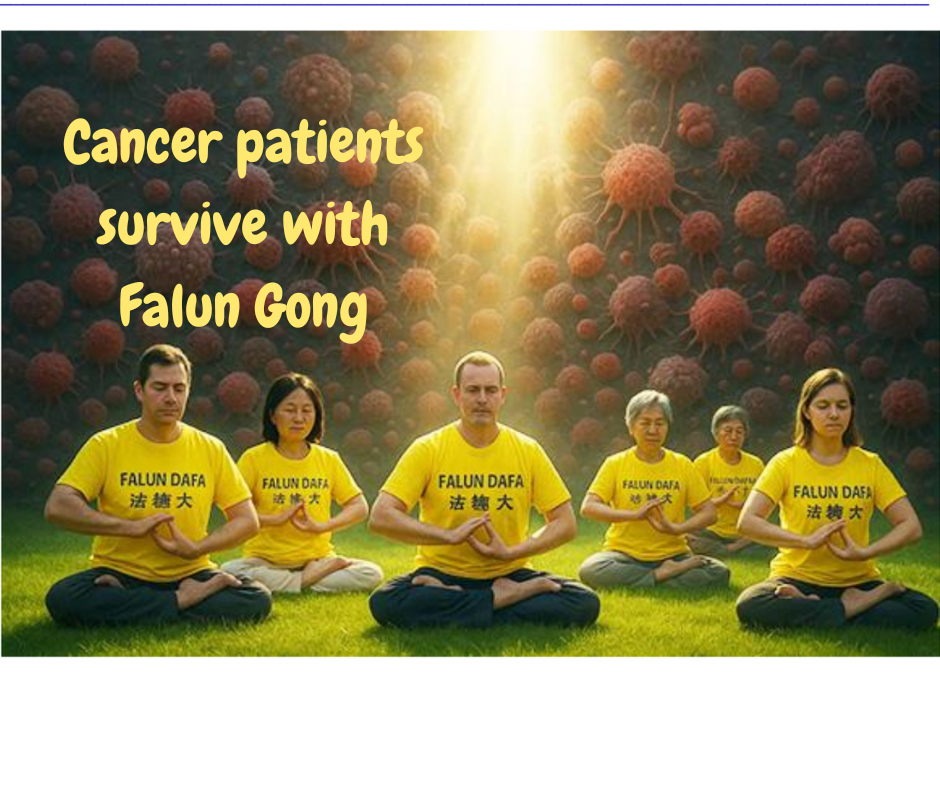
Their average survival time after the fatal diagnosis had increased from the statistically expected 5.1 +/- 2.7 months to 56 to 60 months. In 147 cases, or 96.7%, the symptoms had completely disappeared.
In an earlier study, Falun Gong practitioners were found to have neutrophils—a type of white blood cell—with a longer lifespan and an increased ability to phagocytose: a process in which cells absorb and destroy foreign substances and pathogens.
The Epoch Times magazine presents the case of a 70-year-old Falun Gong practitioner who was diagnosed with advanced rectal cancer in 1991—more than three decades later, she is in excellent health.
Further studies give cause for hope
It has long been recognized in oncology that meditation, mindfulness, and other psychological techniques improve the mental well-being of cancer patients and reduce stress, anxiety, depression, and often pain. However, whether they also prolong life is a matter of controversy. A number of studies suggest that they do:
1.) In the 1980s, a team led by psychiatrist David Spiegel at Stanford University made an astonishing discovery: women with metastatic breast cancer met once a week for a year in a small group. They talked about their fears and learned simple relaxation and self-hypnosis techniques—something like guided meditation— to help them cope better with pain and stress. The original intention was “only” to show that it was good for the soul. In the end, however, it turned out that the women in the group lived on average almost twice as long as those who only received the usual cancer treatment. The result made headlines around the world – and to this day, there is still debate about why the effect was so strong and why later studies have not consistently confirmed it.
2.) A few years later, psychiatrist F. Fawzy at the University of California in Los Angeles examined patients with malignant melanoma (black skin cancer) who had recently undergone surgery. For six weeks, they met in small groups, received information about their illness, and practiced relaxation and visualization techniques to help them cope with their anxiety. Follow-ups six and ten years later showed that fewer people in the group with the additional program suffered relapses, and fewer
died from their melanoma than in a comparison group without psychological support.
3.) Starting in 2008, psychologist Barbara Andersen at Ohio State University in Columbus accompanied 227 women with regionally advanced breast cancer, i.e., not yet fully metastasized but with lymph node involvement. Half of them received the usual oncological therapy. The other half also participated in an intensive group intervention over the course of a year, which included understanding stress, expressing feelings, resolving conflicts, relaxation exercises, and practical tips for exercise and nutrition. Ten years later, clear differences were observed: relapses were less common in the psychologically supported group, and overall, fewer women died — both from breast cancer and overall.
4.) A team led by Michael Antoni and Jamie Stagl in Florida found similarly impressive results. Their study also focused on women with early-stage breast cancer who either attended a one-time information seminar or received a one-year stress management program. The latter practiced mindfulness, breathing exercises, and muscle relaxation, working with stressful thoughts and visualizations. A follow-up observation after a good eleven years showed that participants in the intensive program had fewer recurrences than the control group — and fewer deaths as well. Other studies, however, found no survival advantage. It is therefore not “scientifically proven.” What remains is a well-founded hope.
More than a hair in the soup
How can it be that the Falun Gong study found almost miraculous healing effects, far more pronounced than
any other scientists have been able to determine? Before we pay homage to the boundless power of the mind, we should take seriously the methodological objections raised by skeptics:
- Extremely selective recruitment via a web platform. The study did not examine a cohort of all “terminal” cancer patients,
but collected reports from those affected who, between 2000 and 2015, provided information via a web platform on their diagnosis, duration of Falun Gong practice, survival, symptoms, and quality of life; From these, the researchers later filtered out those who were considered “terminal,” with a predicted survival time of ≤ 12 months. This creates several massive biases:
- Survivorship bias: Only patients who live long enough to submit a report are included in the database
. Patients who die quickly after starting Falun Gong—or whose condition worsens—are very
likely to be underrepresented or not recorded at all.
- Self-selection bias: The people who report are primarily those who are convinced of Falun Gong, feel well enough to fill out a lengthy report, and are often already involved in Falun Gong networks. Those who do not feel any improvement or die early are much less likely to appear on such a platform—especially if they come from the Falun Gong community. This does not result in a “survival rate of all Falun Gong cancer patients,” but rather a collection of survival
success stories, which statistically inevitably look much better than the totality of all cases.
- “Terminal” – how accurate is the prognosis really? The authors define ‘terminal’ as an expected survival time of ≤ 12 months. This “predicted survival” (PS) was primarily derived from the clinical assessment of the attending physician, specifically the clinical prediction of survival (CPS). However, medical survival prognoses are often inaccurate – they tend to be too pessimistic. Many studies show that doctors tend to underestimate the remaining life expectancy of terminal patients.
- Immortal time bias. The average duration of Falun Gong practice was around 53 months. This implies that in order to be included in this evaluation as a
“Falun Gong practitioner with terminal cancer,” one had to (a) survive long enough after diagnosis to start practicing Falun Gong, (b) then live for several more years in order to appear in the web database and be classified as a “terminal case with Falun Gong practice.” Patients who die before or shortly after starting Falun Gong practice, or who practice only briefly and then die, are likely not to be recorded at all. This is a classic example of immortal time bias: patients must “survive” the period without the intervention necessarily being the cause. - No control arm, only comparison with “expected” survival time. The study compares the actual survival time (AS) of approximately 56 months on average with the expected survival time (ES) of around 5 months. There is no parallel control group of terminal cancer patients who do not practice Falun Gong but live in the same time period, region, with similar tumor types and stages, and similar pre-treatment. Instead, a comparison is made with a theoretical expected value. If this is already distorted for the reasons mentioned above — prognosis errors, selection of cases — any real observation appears sensational.
The Falun Gong effect—a tenfold increase in life expectancy—is vastly greater than anything seen in more methodologically sound studies, strongly suggesting that what is being depicted here are primarily the effects of design flaws as biological anomalies
- 5. Endpoints: Freedom from symptoms ≠ freedom from tumors. According to the Falun Gong study, 96.7% of patients reported complete freedom from symptoms; however, these reports were confirmed by treating physicians in only 60 of 147 cases. Being “symptom-free” does not automatically mean “tumor-free.” It is possible to have metastatic cancer and temporarily feel relatively well subjectively. The study report does not indicate whether imaging (CT/MRI/PET-CT), tumor markers, or histological findings were systematically collected for all patients who were “recovered.”
The statement “symptoms completely regressed” is therefore more of a clinically subjective endpoint than a hard oncological remission rate. This does not diminish its relevance to quality of life, but it does make the claimed “cure rate” methodologically questionable. - 6. Confounding factors: lifestyle and social factors. Falun Gong is not just a meditation technique, but a comprehensive lifestyle and belief system. It includes daily exercises, emphasizes morality, and promotes abstinence from alcohol, smoking, and other “vices,” while fostering strong community ties. As a Falun Gong study from Taiwan shows, practitioners have significantly better SF-36 health scores; use medical services less often; and give up risky behaviors (smoking, alcohol) at an above-average rate. All of these factors can significantly improve the prognosis of diseases, independently of Falun Gong. But even if we generously assume that a whole package of meditation, healthier living, social support, and placebo effects is at work, a tenfold increase in expected survival time is biologically difficult to explain. Rather, it suggests that the selection and measurement errors described above have greatly inflated the observed effect size.
In short: Falun Gong certainly benefits cancer patients. They survived with this spiritual practice – but because of it? The study fails to provide evidence that it fulfills the hopes of survival more reliably and significantly than any other form of treatment.
(Harald Wiesendanger)