
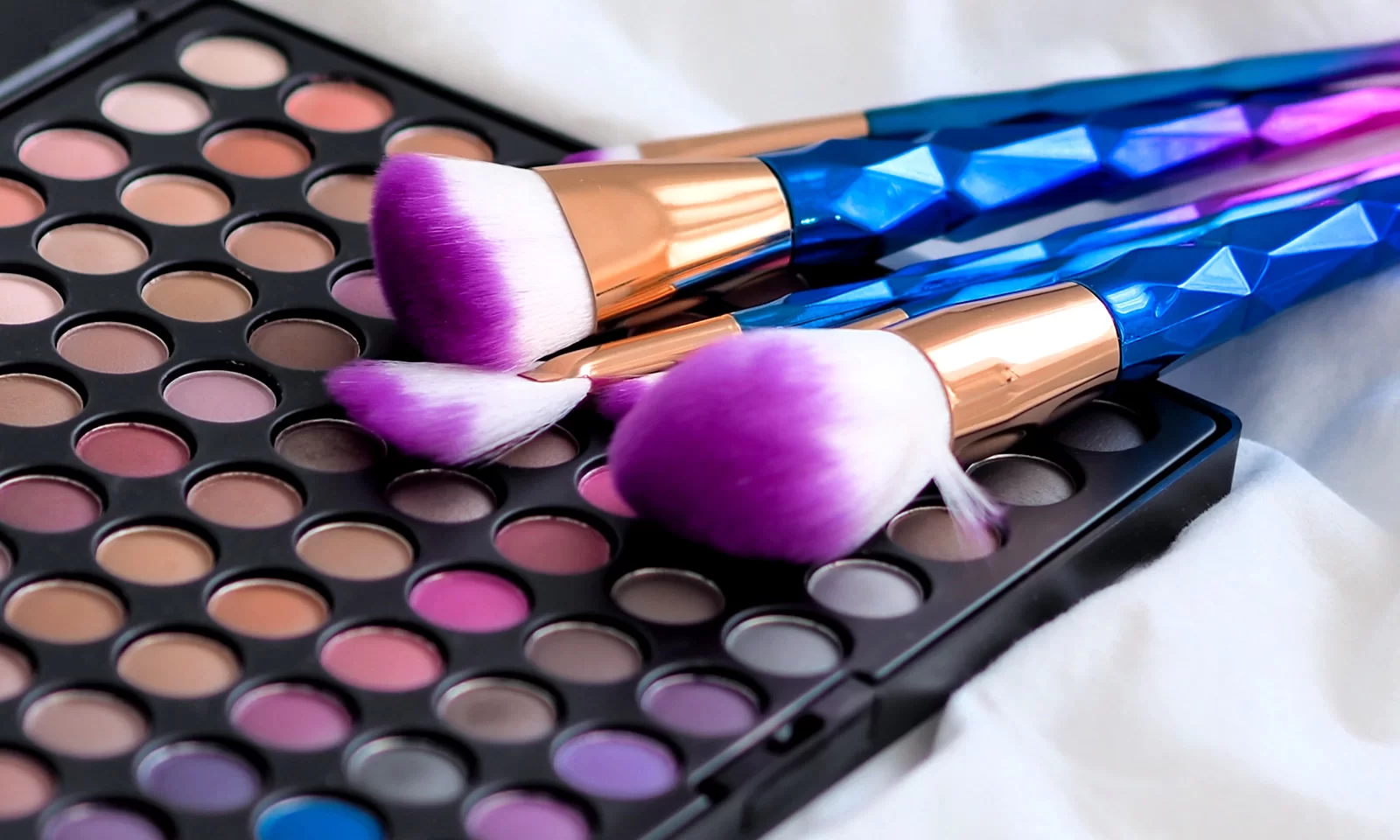
Enhancing one’s appearance through cosmetics to align with the beauty ideals of a given culture: this pursuit is as old as humanity itself. Only recently has awareness grown regarding the health risks associated with it.
Cave paintings in Alicante and Lascaux show that women were already painting their faces with red pigment tens of thousands of years ago. The Assyrians and Babylonians made perfumes from woods, flowers, and resins. In ancient Egypt, both men and women applied vermilion and red ochre to their lips and cheeks, and used powder made from burnt clay (“Egyptian earth,” also known as bronze or terracotta powder) on their skin. They dyed their eyebrows, eyelids, and hair with henna, kohl, indigo, green malachite, and gray galena. To clean their mouths, they chewed herbs and washed with soda-containing water.
In ancient Greece and Rome, too, makeup, skin creams, and perfumed ointments were widespread. At the end of the second century AD, a cream for dry and wrinkled skin became famous; it was formulated by the physician Galen of Pergamon using rose water, olive oil, and beeswax. All cultures throughout human history have embraced a strong culture of personal care and beauty—in all five areas that today constitute the main segments of the cosmetics market:
- Cleaning, care, and protection products, such as soap, shower gel, and bath additives; skin cream, lotion, body milk, gel, and masks for the face, hands, feet, and the entire body; shaving and hair removal products; sunscreen and sun cream for protection against UV radiation; and insect repellents.
- Dental and oral care, e.g., toothpaste, mouthwash, and cleaning and adhesive products for dentures.
- Hair care, e.g., shampoos, styling products, and hair colorants.
- Cosmetic products, e.g., facial makeup (blush), eye makeup (mascara, eyeshadow), lip products (lip gloss, lipstick), and nail polish for fingernails and toenails, as well as self-tanning products.
- Modification of body odor, e.g., using perfume, eau de toilette, deodorant, and antiperspirant.
However, while cosmetics were composed exclusively of natural substances for thousands of years, modern production largely relies on the chemical industry. They are mostly based on mineral oil, disguised under terms such as petrolatum, paraffinum (liquidum or subliquidum), cera microcristallina or microcrystalline wax, ozokerite, ceresin, and petroleum jelly. Stiftung Warentest found it in every single one of the 25 cosmetics it examined in 2015. It even appeared in baby skin creams.
The advantage: such cosmetics are inexpensive to produce and have a long shelf life.
However, some drawbacks are widely underestimated: Like a film, mineral oil coats our skin and clogs the pores. This weakens the skin’s natural regulatory mechanisms. Although the skin feels smooth and supple after application, this effect is only temporary. Beneath the oily protective layer, the skin dries out and ages prematurely.
Equally problematic is the fact that conventional mineral oil-based cosmetics contain two hydrocarbon compounds suspected of causing cancer. These include so-called MOAHs (aromatic hydrocarbons; MOAH stands for Mineral Oil Aromatic Hydrocarbons). In some cases, products contain 15,000 times more MOAHs than have been measured in food. MOSH, or saturated hydrocarbons (MOSH stands for Mineral Oil Saturated Hydrocarbons), is also considered a concern. They penetrate the skin, at least partially, enter our bloodstream, and accumulate in the liver, spleen, lymph nodes, and fatty tissue.
Equally problematic is the fact that conventional mineral oil-based cosmetics contain two hydrocarbon compounds suspected of causing cancer. These include so-called MOAHs (aromatic hydrocarbons; MOAH stands for Mineral Oil Aromatic Hydrocarbons). In some cases, products contain 15,000 times more MOAHs than have been measured in food. MOSH, or saturated hydrocarbons (MOSH stands for Mineral Oil Saturated Hydrocarbons), is also considered a concern. They penetrate the skin, at least partially, enter our bloodstream, and accumulate in the liver, spleen, lymph nodes, and fatty tissue.
The inner coating of cosmetic containers may also contain bisphenol A: a harmful substance with estrogen-like properties that interferes with the endocrine system. (For more details, see “Pure Water” and “Harmful Substances in Packaging.”)
Shampoos, nail polishes, nail hardeners, and hair growth products often contain formaldehyde—a substance believed to be carcinogenic—which is added as a disinfectant and preservative.
Coal tar is frequently used as a base ingredient in hair dyes and anti-dandruff shampoos; it causes headaches, can trigger asthma, and increases the risk of cancer.
Many slow-acting hair dyes contain traces of the toxic heavy metal lead—a notorious carcinogen that also affects hormones. An analysis at Xavier University in Louisiana revealed that some hair dyes contain up to 10 times the amount of lead still permitted in wall paint.
Powders often contain talc, a magnesium silicate that can become lodged in the lungs, cause breathing difficulties, and increase the likelihood of lung cancer.
Toothpaste, shampoo, conditioner, shaving cream, makeup remover—almost everything that lathers when it comes into contact with water contains surfactants, including sodium lauryl sulfate (SLS). Just as laundry detergents do, they also clean as additives in personal care products by ensuring that dirt and grease mix with water. SLS is so aggressive that it can even be used to degrease machinery. It can irritate the eyes—and cause permanent damage, especially in children—trigger skin rashes and dandruff, cause hair loss, and lead to mouth ulcers. When combined with other ingredients, it can form carcinogenic nitrosamines. SLS penetrates the skin particularly easily and can accumulate in the lungs, liver, heart, and brain.
To allow water-based and oil-based components to mix in cosmetics, so-called emulsifiers are added. These are usually synthetically produced polyethylene glycols (PEGs) and their chemical derivatives. (In mandatory labeling, manufacturers often hide them behind the letter sequence “-eth,” e.g., “Laureth 4,” “Ceteareth-15.”) Unfortunately, such substances also bind to the protective lipids in the skin, washing them away. Without a protective film, the skin retains too little moisture, dries out, loses elasticity, and is more prone to wrinkles. Equally concerning: substances like PEG act as “penetration enhancers” in cosmetics, as experts say—they make the skin more permeable, causing it to react more sensitively to other ingredients.
The wide variety of added fragrances in perfumes and other personal care products can cause skin irritation and allergies.
Cream jars and powder compacts, into which we dip our unwashed fingers every day, are breeding grounds for germs. To prevent cosmetics from molding or becoming contaminated with bacteria, preservatives—such as parabens—are added to them. These are suspected of having hormonal effects in the body, reducing male fertility, inhibiting the development of male fetuses, and increasing the risk of breast cancer.
Hair dyes, body creams, hand lotions, and aftershaves, as well as fragrances, contain isopropyl alcohol. This toxic, particularly insidious solvent acts as a “denaturant,” meaning it alters the structure of other chemicals. It can not only dry out the hair but also cause nausea, vomiting, headaches, and hot flashes. By causing cracks in the skin’s surface, it promotes the growth of bacteria that settle in those cracks.
Lipstick, the undisputed leader among decorative cosmetics, is a particularly sensitive issue: In the “Beauty Atlas Germany 2017” survey, one in five women stated that it is an essential item in her handbag. For around 17 million women, it is an integral part of their daily routine. One in four uses lipstick daily, and 18 percent use it several times a week. What very few people consider: When eating, drinking, speaking, and kissing, ingredients are licked off the lips, enter the mouth, and are swallowed. In 2018, the magazine “Öko-Test” demonstrated just how much harmful chemicals this alone exposes the body to. Of the 22 lipsticks tested, only seven received a “very good” rating—without exception, these were natural cosmetics. Half a dozen luxury brands received dismal scores: 13 were rated “unsatisfactory” by the testers, one “adequate,” and a single one at least “satisfactory.” For up to 17.20 euros, they offered: the carcinogenic MOSH from petroleum-based fats, the so-called paraffins; elevated concentrations of the neurotoxin lead; allergenic dyes such as tartrazine (DI 19140) and yellow orange (CI 15985).
Whether as an exfoliant, binding agent, or filler in shampoos and creams, microplastics are found in an increasing number of cosmetics. The tiniest particles penetrate the skin and accumulate in all organs—including the brain, as they cross the blood-brain barrier. Sooner or later, they can trigger serious chronic diseases. Some beauty and hygiene products already consist of more than 90 percent plastic.
Even more insidious are nanomaterials—tiny particles less than one-billionth of a meter in diameter, at least a thousand times thinner than a human hair. Many sunscreens, deodorants, and toothpastes already contain them. Eyeliner pencils and mascaras are made particularly long-lasting by nano-sized color particles.
More and more personal care products contain silver at the nanoscale. These particles can easily penetrate the skin barrier and enter the body. According to the German Federal Institute for Risk Assessment (BfR), silver in nanoform is particularly toxic; high doses can damage the organs of laboratory animals. Furthermore, the BfR sees a risk that silver could promote antibiotic resistance in bacteria, which is why the agency generally warns against its use in everyday products.
Titanium dioxide and zinc oxide nanoparticles have recently begun appearing in sunscreen products. Meaningful studies on their potential health effects are extremely rare. Researchers at the University of Koblenz kept water fleas in containers containing 0.02 to 2 milligrams of titanium dioxide nanoparticles per liter of water—concentrations more than 50 times lower than those shown in previous studies to be dangerous for these animals. While no damage was observed in the organisms directly exposed to the nanoparticles, the situation was different in the next generation. The offspring’s swimming ability was significantly impaired.
BUND sees the greatest danger in nanoparticles contained in sprays: What happens when we inhale these particles? Do they merely irritate the respiratory tract? Or do they enter the bloodstream via the lungs and from there reach all other internal organs? What damage do they cause there?
How can health authorities once again allow the industry to create a fait accompli in its usual “innovative” manner and release substances of a completely new type before their potential hazards have even been remotely researched? In animal testing, nano-titanium dioxide caused lung cancer when large quantities of it entered the respiratory tract. Nano-zinc oxide particles damaged the stomach, liver, heart, spleen, and pancreas when laboratory animals ingested them with their feed. According to studies, both nano-titanium dioxide and nano-zinc oxide can also produce free radicals. These, in turn, can damage the genetic material in human cells when the skin is exposed to UV radiation.
At the very least, mass poisoning reliably boosts manufacturers’ bottom lines. In Germany alone, the market for cosmetics and personal care products is now worth over 17 billion euros. Worldwide, skin care products generate sales of 128 billion US dollars, and perfumes generate 42 billion dollars in sales. Over the course of 60 adult years, the average German woman spends 18,000 euros on beauty products, while the average American woman spends a staggering 225,000 dollars.
How is it possible that the vast majority of consumers continue to buy into such toxic concoctions—at exorbitant prices, usually a hundred to a thousand times higher than production costs—while at the same time becoming increasingly wary of chemicals in their food? How can an organic advocate still be a regular customer at a luxury perfume shop? People trust manufacturers and health authorities who declare the products safe—while failing to realize that virtually no safety tests are conducted before cosmetics are launched on the market. According to an estimate by the Environmental Working Group (EWG), a US environmental organization, only 11 percent of the approximately 10,500 ingredients found in hygiene and beauty products have been adequately tested for safety. Why does this concern so few consumers?
For one thing, hardly anyone bothers to scrutinize the fine print on packaging, especially since it either omits most of the problematic substances or hides them behind cryptic labels. For another—and more importantly—people lull themselves into a false sense of security: After all, we ingest food, whereas we only apply cosmetics externally, don’t we?
Anyone who reassures themselves so naively is in desperate need of a basic dermatology course. Human skin is by no means merely a covering for what lies beneath—a protective shell that can be slathered with chemical creams and lotions without a second thought. It is a living organ that breathes. Because it readily absorbs substances, it soaks up most cosmetic mixtures applied to its surface like a sponge. Over the years, these substances accumulate in the connective tissue and all internal organs—whereby they can cause immense damage to one’s health. Anyone who does this to themselves (and allows the same to happen to their loved ones) lacks biological literacy, vital skepticism, and a sense of responsibility.
Children are far more vulnerable than adults. Their skin is five times thinner, which means harmful substances can penetrate it much more easily. The heart, liver, and kidneys—the body’s primary detoxification organs—do not function fully until after the age of 12.
– Educate yourself about your body’s biochemistry, particularly the role of the skin. The cosmetics industry, like the food, textile, and pharmaceutical sectors, turns you into a lucrative guinea pig for insidious long-term poisoning, the personal consequences of which no expert can predict. Participating, trying, and buying are therefore always risky choices.
– Check the ingredient lists on the packaging. Online and via apps, services like Codecheck and ToxFox show what’s in each product, which ingredients are questionable, and what risks they pose. SkinDeep offers detailed information and safety ratings for over 74,000 cosmetic products.
– Play it safe and switch to certified natural cosmetics—provided they’re the right ones. Even so-called “organic” products can contain questionable fragrances like coumarin, which can trigger allergies, damage the liver, and increase the risk of cancer. They also frequently contain alcohol compounds such as the plasticizer and humectant DEA, which are likewise considered carcinogenic. Even “natural” deodorant sticks made from rock crystal or alum contain aluminum. The most reliable seals of approval are “NaTrue,” “Ecocert,” and “Naturland.” If you also want to ensure that no animals have to suffer or die for the product of your choice, look for the “Leaping Bunny” label from the CCIC (Coalition for Consumer Information on Cosmetics) and the “Rabbit under a Protective Hand” label from the IHTK (International Association of Manufacturers Against Animal Testing in Cosmetics).
https://www.iccs-cosmetics.org
https://this.place/en/blogs/unsere-mission/kosmetik-ohne-tierversuche
https://www.iccs-cosmetics.org
– Question the subtle suggestions of advertising campaigns (“You’ll only become truly attractive/even more desirable with…”), the downplaying tactics of authorities, modern beauty ideals, and the obsession with youth and self-optimization. Stand confidently by your appearance instead of letting yourself be enslaved by the spirit of the times.
Recommended reading/links:
Toxic Chemicals Abundant in Cosmetics, Hair Products, with Little Regulation
The Toxic Twelve Chemicals and Contaminants in Cosmetics
Öko-Test, May 11, 2017: “Problematic Substances in Cosmetics”
BDHI: Certified Natural Cosmetics
Heike Käser: Make Your Own Natural Cosmetics. The Handbook, Linz, 2nd ed. 2012
See original post > https://www.stiftung-auswege.de/gesund/schadstoffe-meiden/kosmetikschadstoffe.html